


IN TODAY’S EDITION:
Earlier this month, Andy Burnham promised that he would “review all possible options” to deport Shabir Ahmed, the ringleader of the notorious Rochdale grooming gang, who was recently released from prison. “Like everyone, I want this vile criminal out of the country,” he tweeted. Ahmed was stripped of his British citizenship after his 2012 conviction, and home secretary Shabana Mahmood will now pursue changes to the law to help deport him.
Few would disagree that Ahmed is a “vile criminal”, and few would miss him were he sent to Pakistan, where he remains a citizen. But is revoking citizenship in such cases the best response? And does the strengthening of Home Office powers to strip Brits of their citizenship risk unintended consequences?
In our latest issue, Samira Shackle details the emergence of “two-tiers” of citizenship since the “war on terror”. Citizenship was once rarely removed, and only if the person was a dual national and would not be left stateless as a result. But now, the Home Office can strip someone’s citizenship as long as they believe they could acquire another citizenship. Individuals affected don’t even need to be notified.
On today’s episode of the Prospect Podcast, Shackle joins our hosts Ellen and Alona to discuss how this once unalienable right has been eroded. With parties of the populist right supporting mass deportations and “remigration”, Shackle worries that these expanded state powers could be put to questionable use if they remain unchecked.
This is just one of a flurry of announcements from Burnham, who seems to be averaging one new policy every day. This week, he announced that he will introduce more vocational education for over-14s. Andrew Adonis agrees that we need more vocational options—but not because too many students are going to university, which he finds a “completely nonsensical” claim. The real crisis is the number of students who leave school with “few if any worthwhile qualifications”, he writes.
That’s a problem for the next academic year, however. Right now, students are on their summer break. And plenty of families are keen to travel overseas. Taking such trips in Europe, though, is increasingly risky. France and Spain, two of the most popular holiday destinations, are facing devastating wildfires, whose spread and ferocity has been increased by climate change. More than 370,000 residents and holidaymakers have been forced to evacuate across southern and western Europe since summer began. Sophie Brocas, prefect of the French department Gironde, has explicitly urged tourists “not to come”.
Many of these areas are economically dependent on tourism, so in the long run, the answer for tourism boards “is not to stop promoting Europe,” writes policy expert Sema Karaman, “it is to find ways to spend public money more responsibly.” Has our warming climate mucked with your holiday plans? Email me at ben.clark@prospectmagazine.co.uk.
Benjamin Clark
Head of digital audience
The latest episode of the Prospect Podcast
Stateless: How the UK government strips citizenship—and why it matters
From our latest issue
Britain’s citizens of nowhere
New online

A Neet dilemma
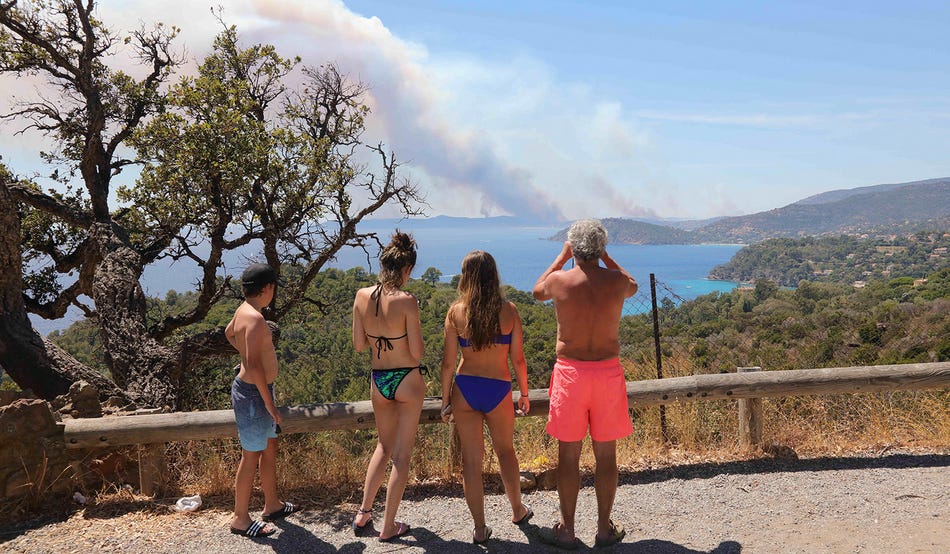
As wildfires rage, Europe’s summer holidays are over
The continent’s peak season is now defined by extreme heat. Its approach to tourism must change