


Andy Burnham is in Manchester today, working for the first time at the much-hyped Number 10 North. The new government office in the city’s Heron House will drive the prime minister’s devolution agenda, and Burnham will today chair a meeting of the National Economic Council (a revived Gordon Brown initiative) on the same topic. As we’ve pointed out in Prospect recently, however, devolution may be tougher to implement than Burnham expects, due to tepid Labour support and poor pay and conditions in local government.
Fellow Greater Mancunian Angela Rayner stressed the importance of overcoming the obstacles, telling the BBC that Labour is on “borrowed time” to turn the country around. When it comes to constitutional reform, Prospect’s legal columnist David Allen Green agrees. On one hand, “never in recent history has there been such a potential majority for fundamental constitutional reform,” if Labour MPs and nominally left-of-centre parties can find agreement. But “if there is a radically illiberal majority in the next parliament, our constitutional arrangements—as set out in previous Weekly Constitutional posts here and here—could buckle quite quickly.” If we need reminding of the stakes, Green points to the United States.
The World Cup provided a worrying snapshot of the creeping authoritarianism of Trump’s America. As Hasan Islam writes, “operating under the guise of national security, the US militarised its borders against the tournament’s own participants.” This is not an aberration, however—“the World Cup has never been a retreat from politics,” Islam writes, “it is its ultimate mirror.”
Vitali Vitaliev knows a thing or two about authoritarianism, having grown up in the Soviet Union. After recently accepting an Amazon order with excessive packaging (though at least it was recycled), Vitaliev was reminded of the peculiar “coarse, grey-brown” wrapping paper of the USSR. The colour helped conceal the contents of the so-called special food parcels, or “zakazi”, given to the elite, Vitaliev explains.
Staying in the former Communist bloc, Kiran Sidhu was struck on a recent trip to Warsaw by a longing for home. It manifested not so much in an attachment to a particular place (though she loves her Cambrian Mountains abode), but in a desire to be surrounded by her possessions. We are often told that such sentiments are materialistic, but “perhaps we should be more willing to acknowledge the part our possessions also play in shaping us,” she writes. Email your most cherished possession, and your thoughts on today’s news, to ben.clark@prospectmagazine.co.uk and have a great weekend!
Benjamin Clark
Head of digital audience
New online
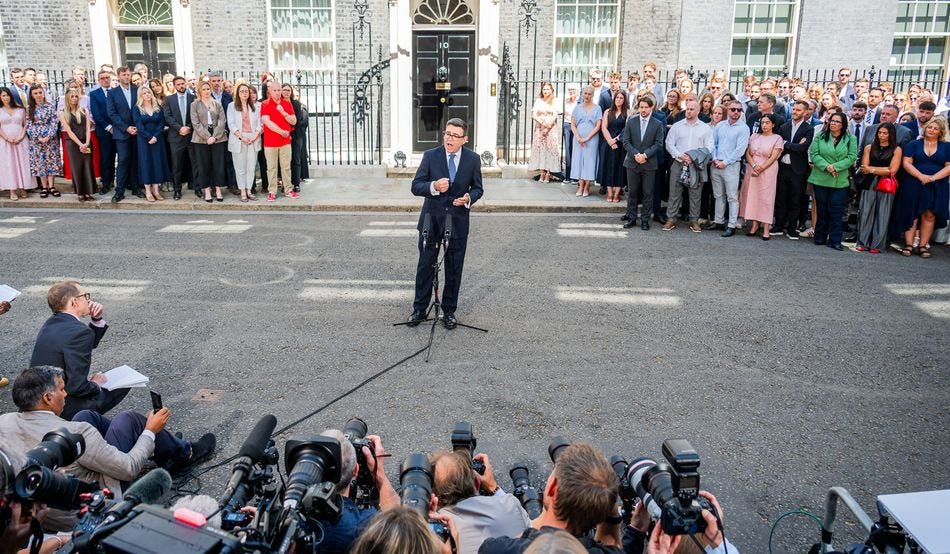
Can we safeguard our constitution before the next general election?

No, this wasn’t the most political World Cup in history
Power, soft corruption and commerce is what the tournament has always been about
From our forthcoming issue
Second life: We have packaged ourselves into madness
From our latest issue

Rural life: I will no longer be ashamed of being materialistic
I have come to realise that my treasured possessions form part of my sense of home
Want to see more of Prospect in your Google search results? Add us as a preferred source